Use paper stickers for dry, short-to-medium-life packaging and promotions; use a suitable synthetic film when moisture, abrasion or outdoor exposure matters. Then choose permanent, removable or specialist adhesive for the real surface. Material and adhesive determine performance more than the printed finish.
Start with the surface and environment
A sticker for a paper mailer has different needs from one on a chilled bottle, textured plastic, metal tool or takeaway cup. State the surface, temperature at application, service temperature, moisture, oils, cleaning and expected life. Curves and small diameters increase edge lift.
Test on the real product. Plastics can contain additives that affect adhesion, and recycled board can vary in surface energy. A generic “strong adhesive” is not a complete specification.
Paper sticker materials
Coated paper gives sharp colour and is economical for boxes, bags, seals and promotions kept dry. Uncoated paper can feel more natural and may accept writing. Paper is easy to die cut and often appropriate where the label and pack share a paper-based disposal route.
Paper is not designed for prolonged moisture or abrasion. Lamination or varnish can improve resistance, but if the label must live outdoors or in an ice bucket, a synthetic material is usually the honest route.
Vinyl and other synthetic films
Vinyl and polypropylene films resist moisture better and can conform to many surfaces. White films provide opacity; clear films allow the product or pack to show through. A white ink layer may be needed beneath colour on clear stock, depending on the print process.
Outdoor durability depends on the complete system: film, ink, adhesive, lamination, exposure and surface preparation. “Waterproof” should not be promised without a tested specification.
Permanent, removable and repositionable adhesives
Permanent adhesive is designed to build a strong bond, but performance varies by substrate. Removable adhesive aims to peel cleanly for a defined period; it may still mark delicate paper, aged paint or some plastics. Repositionable products allow initial adjustment but are not interchangeable with long-term removable labels.
For security, tamper-evident films fragment or reveal a message. Freezer and chilled labels need adhesives designed for low-temperature application or service. Describe when and where the label is applied, not only where it ends up.
Shape, finish and artwork
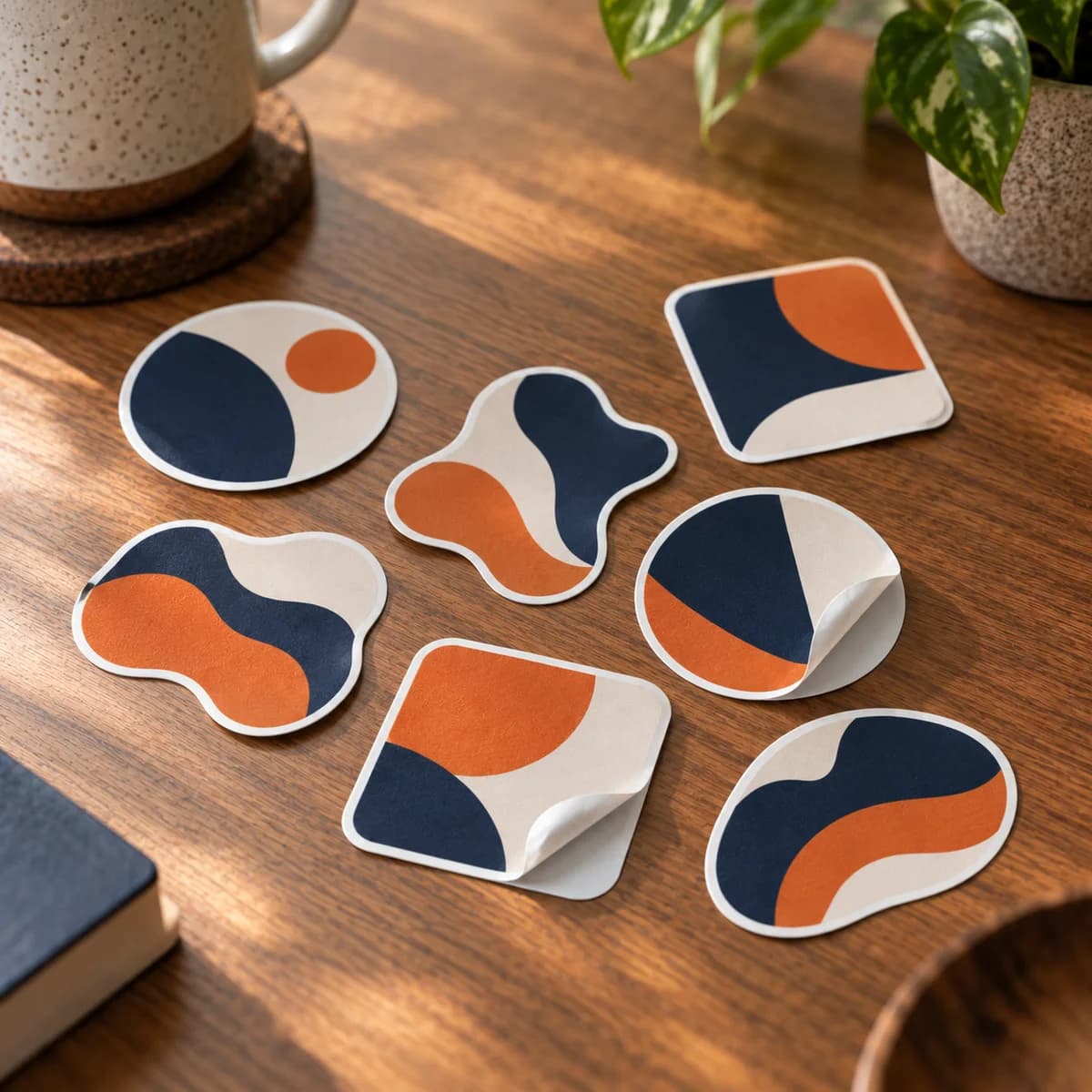
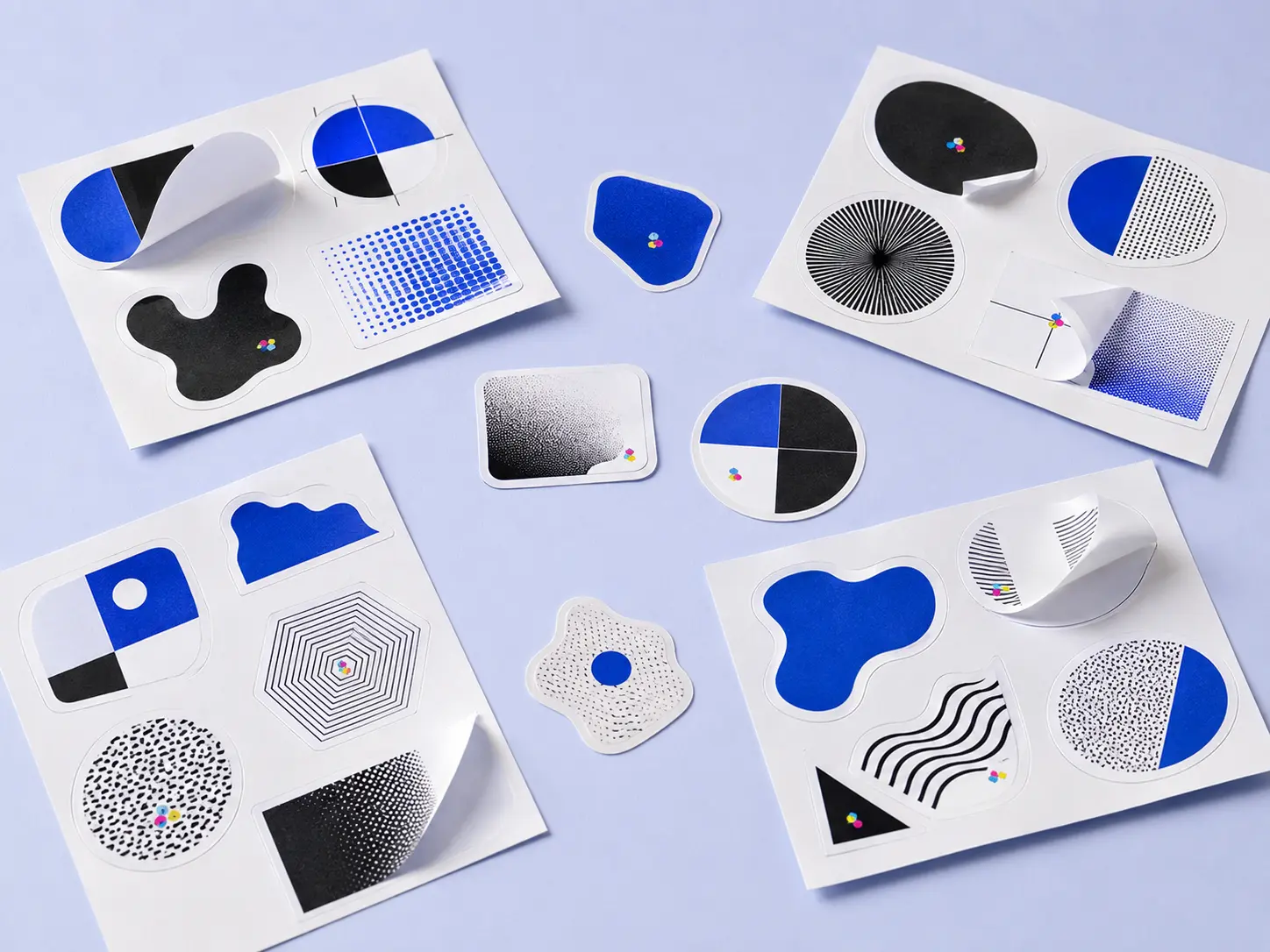
Rounded corners resist lifting better than sharp points. Very fine cuts can tear during stripping or application. Leave safe space around type and barcodes, and confirm whether labels are supplied on sheets, rolls or individually cut. Application method affects winding and spacing.
Matt, gloss and clear finishes change appearance, while lamination adds protection. Use a physical proof where colour, opacity or fit is critical. A label can look perfect flat and fail once wrapped around the actual pack.
| Material | Strength | Typical use |
|---|---|---|
| Coated paper | Sharp, economical, dry use | Boxes, bags, promotions |
| Uncoated paper | Natural and writable | Craft packaging and seals |
| White synthetic | Moisture resistant, opaque | Products, bottles, outdoor |
| Clear film | No-label look | Glass and transparent packs |
| Tamper evident | Shows interference | Security and warranty seals |
Common questions
Are vinyl stickers waterproof?
The film may resist water, but ink, laminate, adhesive and edge exposure determine complete performance. Specify the actual environment.
Will removable stickers leave residue?
A suitable removable adhesive should peel cleanly from tested surfaces within its intended period, but delicate or aged surfaces always need testing.
Sheets or rolls: which is better?
Sheets suit hand application and modest quantities. Rolls suit dispensers, labelling equipment and higher-volume application when winding and spacing are specified.
General print guidance. Confirm material availability, suitability and timings for your specific order.